
"Ethiopian bean shape"
1000 article(s) found
Introduction to the origin and characteristics of Ethiopian coffee, Yega Xuefei
The coffee producing areas of Ethiopia are Sidamo, Harald and Sidamo, Harrar and Yirgacheffe. Sidamo and Harrar are provinces and divisions. Sidamo is located in the south of Ethiopia bordering Kenya, and Harrar borders Somalia in the east of Ethiopia. Although Yirgacheffe is a community in the Sidamo region, due to soil composition and water content and other reasons.

What are the beans and varieties of Ethiopian Manor? How is the flavor and taste?
Professional coffee knowledge exchange more coffee bean information please follow the coffee workshop (Wechat official account cafe_style) Ethiopia is the hometown of Arabica coffee, it is in the forests of the Kaffa region that you can see wild Arabica coffee. In Ethiopian, coffee is called Bun or Buna, and coffee beans (coffeebean) may be from Ka

Ethiopian coffee only needs to be introduced in the producing area.
The coffee producing areas of Ethiopia are Sidamo, Harald and Sidamo, Harrar and Yirgacheffe. Sidamo and Harrar are provinces and divisions. Sidamo is located in the south of Ethiopia bordering Kenya, and Harrar borders Somalia in the east of Ethiopia. Although Yirgacheffe is a community in the Sidamo region, due to soil composition and water content and other reasons.

Ethiopian Sidamo Coffee Yega Chuefei Coffee is from the Sidamo producing area?
It has unique fruit aromas of citrus and lemon, with aromas of jasmine, sour taste similar to wine, clean and unmixed taste, just like freshly boiled citrus fruit tea with a long finish. Full of floral and citrus aromas, the performance is exciting, moderate baking has a soft sour taste, deep baking gives off a strong aroma, rich and uniform taste is Essel

Ethiopian Coffee Manor Fine Coffee Bean Origin, Development, History and Culture
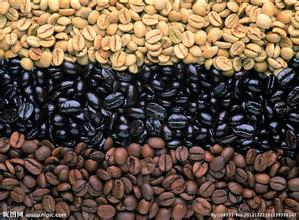
It has been estimated that there are at least 2000 varieties of Ethiopian coffee and even more than 4500 kinds of coffee. Compared with the fat posture of Bourbon SL28, the main variety next to Kenya to the south, or Tibica in Central and South America and Asia, Ethiopian beans look a little malnourished. But beans can't be judged by appearance, and Ethiopian coffee has the highest citrus flavor in the world, whether it's instant coffee or

Ethiopian coffee beans G1 and G2 are just different in the number of defective beans?
Ethiopian coffee beans G1 and G2 are just different in the number of defective beans. After picking beans without special screening and treatment, uneven appearance and maturity are mixed together, the process is relatively rough, so the quality of coffee beans is unstable and prone to defective beans. two。 Coffee farmers usually find an open space near their home to deal with it, so there are often a lot of miscellaneous things on the ground.

The Origin and Development of Xidamo Solar Yega Snow Coffine in Ethiopia
Follow the caf é (Wechat official account vdailycom) found that the beautiful cafe opened its own shop to sun Yega snow coffee, beans are small and neat in short round shape, Ethiopian sun beans are generally G3--G5, but this bean is G2, equal to the grade of water-washed beans, although there are still a few defective beans, but compared with Harald and Sidamo sun beans, it is commendable Yi
The importance of coffee classification and grading How is Ethiopian coffee grading divided
Ethiopia is the first country to discover coffee. It is the most important producing country in terms of coffee quality and yield. The annual production quantity is about 350,000 tons. Ethiopia is famous all over the world for its mocha beans blown by the sea. Yirgacheff is the Arabica produced by Sidamo in the south at an altitude of 1700~2100 meters.

Introduction to the flavor and taste characteristics of Ethiopian coffee manor with rich alcohol thickness
Although the Ethiopian Yirgacheffe coffee is petite, it is gentle and delicate and sweet. As the hometown of coffee, thousands of years of planting history and processing tradition in Ethiopia have created high-quality washed Arabica beans. Light baking has unique sweet aromas of lemon, flowers and honey, soft acidity and citrus flavors, fresh and bright on the palate. No.

Ethiopian coffee beans G1 and G2 are just different in the number of defective beans.
Ethiopian coffee beans G1 and G2 are just different in the number of defective beans? the characteristics of the variety introduce that defective beans are an important factor that destroys the flavor of the final coffee. Therefore, defective beans should also be removed in the last step of raw bean processing. This has the problem of the number of defective beans, so according to the proportion of defective beans, supplemented by the size of the screen is also a way of classification. Due to the trend of boutique coffee

Introduction to the Flavor of Ethiopian Coffee planting method Grade and Grade Yega Chuefei
Ethiopia is the first country to discover coffee, and it belongs to the most important producing country in terms of coffee quality and output, with an annual production of about 350000 tons. Ethiopia is famous all over the world for its mocha beans in Hara, of which Yirgacheff is an Allah produced by Sidamo in the south in a small area with an altitude of 1700 to 2100 meters above sea level.

Introduction to the flavor and taste characteristics of Ethiopian coffee manor with rich alcohol thickness
The highest grades of Ethiopian washed coffee Yega Chuefei G1 G2 Sidamo (Yirgacheffe, Sidamo) are Grade 2 and Grade 3 (G2, G3), while most of the sun-processed coffee in eastern Ethiopia are Grade 4 or Grade 5 (G4, G5). In many cases, level 4 coffee is marked as level 5 in order to reduce taxes. At present, the grading is not uniform and messy, because there is also sun processing.

Introduction to the flavor and taste characteristics of Ethiopian coffee manor with rich alcohol thickness
The highest grades of Ethiopian washed coffee Yega Chuefei G1 G2 Sidamo (Yirgacheffe, Sidamo) are Grade 2 and Grade 3 (G2, G3), while most of the sun-processed coffee in eastern Ethiopia are Grade 4 or Grade 5 (G4, G5). In many cases, level 4 coffee is marked as level 5 in order to reduce taxes. At present, the grading is not uniform and messy, because there is also sun processing.

Ethiopian Yegashefi Aduo Coffee with rich body Flavor Characteristics
Ethiopia is an ancient civilization with a history of 3,000 years. The Hamites, who migrated from the south of the Arabian Peninsula, were the earliest inhabitants. Monnique I became king in 975 BC. In the 8th century BC, the Kingdom of Nubia was established. From the 1st century to 976 AD, the Ethiopian Empire was established in Aksum in the north, also known as the Kingdom of Aksum. Christianity was introduced to Ethiopia in the 4th and 5th centuries.

Various coffee cultivation methods the flavor of Ethiopian coffee
The origin of the coffee tree is Ethiopia in Africa. In botany, coffee trees belong to the evergreen trees of the subgenus Rubiaceae, and coffee beans, commonly known as coffee beans, are the seeds of the fruit of coffee trees, just because they are shaped like beans, so they are called coffee beans. Climate is the decisive factor for coffee cultivation. Coffee trees are only suitable for growing in the tropics or subtropics, so latitude 25 is south and north.

Introduction of coffee manor flavor and taste varieties in Ethiopia
Introduction of coffee manor flavor and taste varieties in Ethiopia Harald coffee (HarrarCoffee) comes from the eastern highlands of Ethiopia and is medium-sized in bean shape.

Introduction to the flavor and taste of Ethiopian Sidamo Shachiso Coffee with a strong floral flavor.
In July 1991, EGF hosted a national conference with the participation of more than 20 political and ethnic organizations. The meeting adopted the Transitional Charter and elected an 87-member House of Representatives, with EGF Chairman Meles Zenawi as President of the Transitional Government and President of the House of Representatives. A transitional government was established. On May 24, 1993, Eritrea (formerly the province of Eritrea, Ethiopia) adopted

Ethiopian Arabica coffee with rich body Original growing environment Fine coffee
The highest grades of washed Ethiopian coffee Yirgacheffe G1 G2 Sidamo are Grade 2 and Grade 3 (G2, G3), and the coffee processed in the sun in eastern Ethiopia is mostly Grade 4 or Grade 5 (G4, G5). In many cases, fourth-grade coffee is labeled as five-grade in order to reduce taxes. Now the classification is not very uniform, some chaos, because there are sun processing

Ethiopian Kocher Estate Coffee Flavor Taste Estate Features
Light Rail: On the morning of September 20, 2015, Addis Ababa Light Rail, the capital of Ethiopia, which was constructed by China Railway Corporation and provided operation and management services by Shenzhen Metro Group, was officially put into operation. Addis Ababa Light Rail Project consists of east-west line and north-south line. The planned main line of the project is about 75km long. The first phase of light rail project will be implemented this time, with the total length of main line of 31.048km(including 2.662km of common rail section).

A brief introduction to the Market Price of Fine Coffee Bean varieties in the advantaged Ethiopian Coffee Manor
Harald coffee (HarrarCoffee) comes from the highlands of eastern Ethiopia and is medium-sized in bean shape.